

Top 20 Most Common Car Problems
Most common car problems begin as something minor, but regular maintenance can prevent them from developing into major, expensive issues. Depending on the problem, you could face issues with performance, fuel economy, and safety. Some preventable issues include the Check Engine Light, a dead car battery, and brake problems. Car owners also tend to face starting troubles, slipping transmission, and difficulty with the ride. When the defects cost so much money and cannot be repaired, it may be time to file a Lemon Law claim.
The Lemon Pros are experts in dealing with the Lemon Law and defective vehicles. Because our practice area is focused on lemon vehicles, we have been able to secure compensation for drivers. Contact us today to get a free consultation about your branded title vehicle!
This guide explains common car problems and helps you decide whether to pursue a Lemon Law claim if your local auto repair shop cannot fix your vehicle.
Table Of Contents
- What Are the Top 20 Most Common Problems in Cars?
- 1. Check Engine Light Keeps Coming On
- 2. Engine Won’t Start
- 3. Low Fluid Levels
- 4. Brake Issues
- 5. Car Pulls to One Side When Driving
- 6. Automatic Transmission Slipping or Shifting Roughly
- 7. Overheating Engine
- 8. Dashboard Warning Lights Won’t Turn Off
- 9. Flat Tires or Blowouts
- 10. Shaking or Vibrating While Driving
- 11. Strange Smells Inside or Around Your Car
- 12. Fluid Leaks Under the Car
- 13. Car Won’t Accelerate Properly
- 14. Knocking or Ticking Noises from the Engine
- 15. Poor Fuel Economy
- 16. Steering Feels Loose or Unresponsive
- 17. Air Conditioning Not Blowing Cold Air
- 18. Headlight or Taillight Failure (Electrical Problems)
- 19. Car Stalls While Driving
- 20. Exhaust Smoke
- Common Car Problems vs. Typical Repair Costs
- How Can You Identify and Diagnose Common Car Problems?
- How Can Preventive Maintenance Help You Avoid Common Car Problems?
- What if These Common Car Issues Keep Coming Back?
- When Should You Use the Lemon Law for Repeated Car Problems?
- Our 4-Step Lemon Law Approach
- Need a Lemon Law Attorney for Your Defective Vehicle?
- Frequently Asked Questions
What Are the Top 20 Most Common Problems in Cars?
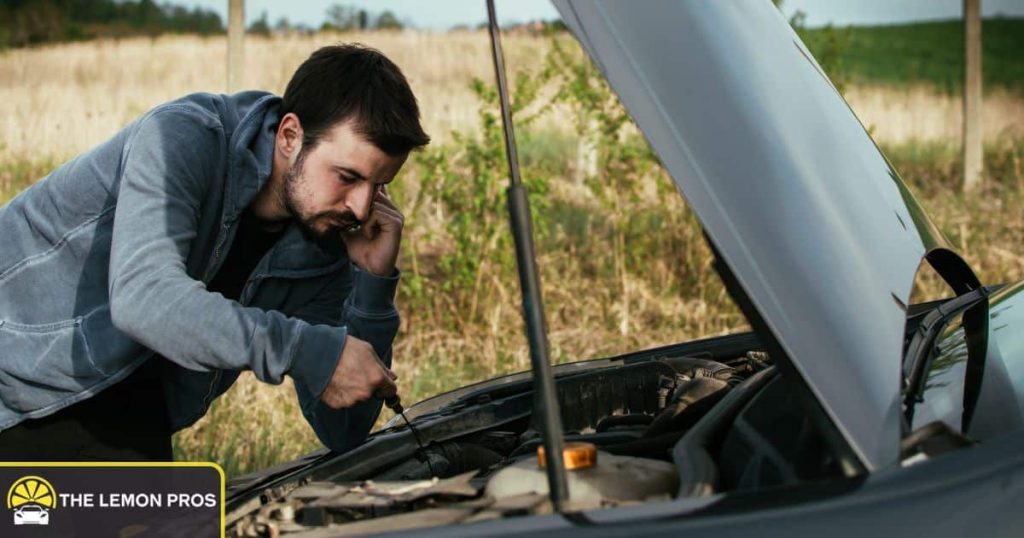
While anything could go wrong with today’s modern cars, this is a list of what most commonly fails. Some of these issues can be prevented with proper maintenance, so it’s important to follow all manufacturer-recommended service schedules.
1. Check Engine Light Keeps Coming On
The Check Engine Light is probably the most well-known of all the car warning lights. It tells you when there’s a fault with the vehicle that needs to be checked out. In many cases, the light is alerting you to faulty O2 sensors, a loose gas cap, a misfire that requires a tune-up, or other simple faults.
However, when the Check Engine Light starts flashing, you need to stop driving. The flashing signal indicates that a serious issue is occurring, and damage could follow if you don’t pull over.
To repair the Check Engine Light, you need to find out what’s causing the fault and fix it. You can plug an OBDII scanner into the car to read the manufacturer’s trouble codes. These help to decipher the problem.
2. Engine Won’t Start
One of the most common car problems is when the engine won’t start. While it may seem like an issue with the engine itself, it usually isn’t. If there’s no response from the motor or just clicking when you turn the key, you may have a dead battery or a bad starter motor. Starting issues can also be caused by a failing ignition system.
Test the battery with a multimeter to see if it is holding a charge. If the battery is new but isn’t charging, you may need to check the alternator instead. Otherwise, you can replace the starter or other faulty components after performing a complete diagnosis.
3. Low Fluid Levels
Low fluid levels happen when there’s not enough of the essential liquids needed to support the system. Your car needs engine oil, coolant, automatic transmission fluid, brake fluid, power steering fluid, and windshield washer fluid.
Some of the fluids keep the systems cool and lubricated, ensuring that the car is safe to drive. When they get low, you may notice warning lights on the dashboard, performance issues, overheating, or strange noises, depending on the system.
To diagnose the problem, you need to check the fluid level. Oil level is checked with a dipstick, as is most transmission systems. Brake fluid and coolant may be checked with reservoir markings. You also need to check for fluid leaks. Put a cardboard under the car to see if anything is dripping out. The fluids can be identified by color, such as brown/black for oil, lighter for leaking brake fluid, or red for transmission fluid.
Once you ensure there are no leaks, you want to top off the system. Make sure you use the right fluid for your car, as determined by the manufacturer's specs.
4. Brake Issues
Brake issues quickly turn into a serious safety concern if left unchecked. If you hear noise while braking or experience reduced stopping power, you need to have the brakes checked immediately. Worn brake pads, warped rotors, and stuck calipers are common, especially if the brake system hasn’t been maintained.
Have the pads and rotors replaced if they are worn, and ask for a full brake system inspection. During this inspection, the brake fluid will be checked, and all of the lines will be examined for wear or leaks.
5. Car Pulls to One Side When Driving
When the car veers to the left or right without moving the steering wheel, there’s usually an issue with the tires or alignment. Although the problem could also be caused by brake drag from a stuck caliper.
Check the tire inflation and adjust if necessary. If that all checks out, you should have the wheel alignment checked by a professional.
6. Automatic Transmission Slipping or Shifting Roughly
Jerky shifting, delayed acceleration, and slipping gears can all be due to transmission problems. In some cases, the car may simply have low fluid that needs to be topped off. Otherwise, there could be a solenoid malfunction or internal damage to the transmission.
Check the fluid level and perform a flush if recommended. For more complicated transmission repairs, it’s best to visit a shop that is familiar with your car model.
7. Overheating Engine

A rising temperature gauge or steam coming from the hood indicates trouble with the cooling system. An overheating engine can be caused by coolant leaks, a bad thermostat, or a failed water pump.
You need to refill the coolant and inspect the radiator. It’s also important to check for leaks. Look at the color of the engine oil and see if there’s any milky substance inside the engine. If coolant has leaked into the combustion chamber, you may be dealing with a blown head gasket. This problem can be a big deal and is expensive to fix, but it is a common issue on older models.
8. Dashboard Warning Lights Won’t Turn Off
Today’s car models include warning lights for a variety of systems. You may see an ABS light for the anti-lock braking system, tire pressure lights, and one for the airbags. These usually indicate a sensor malfunction or electrical issue.
With a code scanner, you can diagnose the trouble and replace the faulty parts.
9. Flat Tires or Blowouts
When a tire loses air pressure, it creates a safety issue. Underinflation is one of the main reasons for blowouts and is completely preventable with regular pressure checks. The tires may also have worn tread, or you may be driving in an area with a lot of road hazards, such as construction sites.
To prevent tire issues, check the pressures often. Also, make sure you keep up with tire maintenance, such as regular rotations and balancing.
10. Shaking or Vibrating While Driving
If the steering wheel or the whole car starts shaking while driving, you should never ignore it. That shaking is a sign of unbalanced tires, a worn-out suspension, or warped brake rotors.
Get the tires rotated and balanced to see if that fixes the problem. If the shaking continues, you want a mechanic to check the brakes and suspension.
11. Strange Smells Inside or Around Your Car
You should never notice weird smells in or around your car. If you smell something burning, sweet, or musty, the car may be trying to tell you that there’s a fluid leak or mold growing in the air conditioning.
Sniff out the source with your nose to see if you can pinpoint the system it’s coming from. Look under the hood for leaks and underneath for drips. If the smell is coming from the AC, you may need to clean out the vents or replace the cabin air filter.
12. Fluid Leaks Under the Car
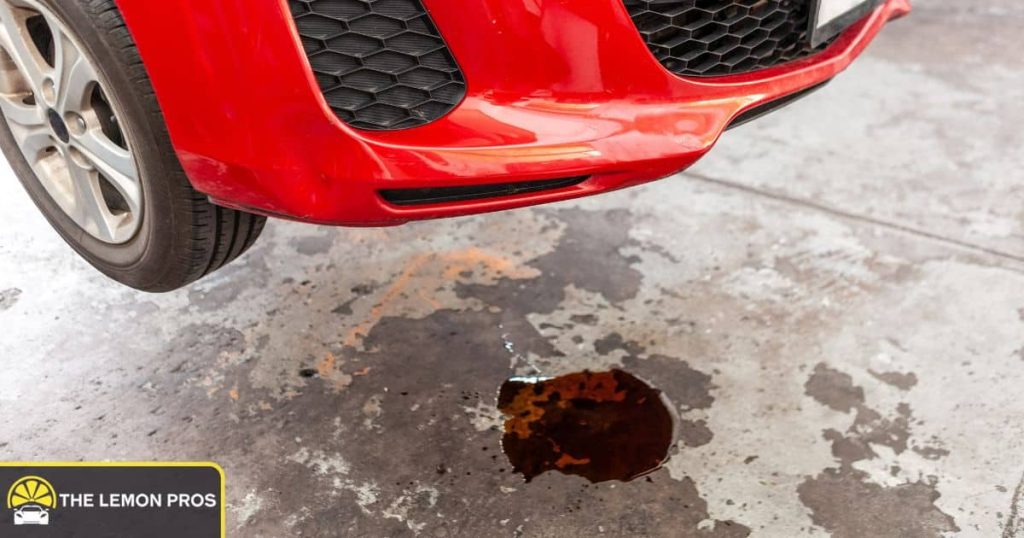
If you notice puddles under your parked car, it could be the result of leaking fluid (transmission, oil, brake, coolant, etc.). However, you want to be careful that you don’t mistake the water dripping from the air conditioner as a leak because this is part of normal operation.
Check all the fluid levels and pinpoint where the leak is coming from. You may need to have a mechanic replace parts to stop the leak at the source.
13. Car Won’t Accelerate Properly
If the car feels sluggish when you step on the gas, there’s definitely a problem. Delayed acceleration can be caused by a dirty throttle body, clogged fuel injectors, or a malfunction with the fuel system.
Start by replacing the engine air filter if it’s time. You can also try a fuel system cleaner. If those options don’t help, you may need to have the throttle body replaced or have a mechanic look at the injectors.
14. Knocking or Ticking Noises from the Engine
No one ever wants to hear ticking or knocking from the engine, especially when first starting it up. At best, it could be that there’s a low fluid level or a dirty oil filter. On the flip side, there could be valve issues or worn lifters, which may require a complex repair or an engine replacement.
Topping off the oil or changing the filter doesn’t take long. How long does it take for a dealership to replace the engine? Sadly, this isn’t just one of the most expensive repairs, but also the most time-consuming, with many dealerships taking weeks to put in a new engine.
15. Poor Fuel Economy
Any number of mechanical and electrical system failures can lead to fuel economy drops. You may be facing a dirty air filter, O2 sensor failure, or something as simple as underinflated tires.
Perform a complete tune-up on the car to see if it runs better. Remember to check the tire pressures and replace the necessary filters. Otherwise, have a mechanic check the sensors and run a full diagnostic evaluation on the car.
16. Steering Feels Loose or Unresponsive
If you notice delayed or wobbly steering, the system may have low power steering fluid. It could be something more severe, such as worn tie rods, a bad steering rack, or a failing power steering pump.
Have a mechanic inspect the entire steering system to determine the cause. It may just require more fluid, or a part may need to be replaced.
17. Air Conditioning Not Blowing Cold Air
If your A/C is blowing warm air instead of keeping you cool, it is a sign that something’s up. Whether it’s blowing hot all the time or just can’t stay consistently cold, that’s your cue to have it checked.
The most common fix is a simple refrigerant recharge. But if that doesn’t do the trick, you might be dealing with a broken compressor or a clogged condenser. Either way, getting it inspected early can save you from sweating it out later, especially in summer.
18. Headlight or Taillight Failure (Electrical Problems)
If your headlights or taillights keep going out, even after you replace the bulb, there’s probably more going on than just bad luck. Repeated light failure can be caused by electrical problems, moisture getting into the housing, or loose connections.
Replace the bulb and check the socket for corrosion or moisture. If that doesn’t solve it, you might need to inspect the wiring or have a mechanic test the electrical system. It’s a small issue that can lead to big safety (and legal) problems if left unchecked.
19. Car Stalls While Driving
If your car suddenly stalls while you’re driving, that is more than a mere inconvenience. It’s also a serious safety risk. Random engine shut-offs can point to problems with your fuel pump, faulty sensors, or issues in the ignition system.
To figure it out, a mechanic can hook up a scan tool to check for trouble codes. From there, the fix could be anything from replacing a bad sensor to repairing the fuel or ignition system.
20. Exhaust Smoke
When there’s visible smoke coming from the tailpipe, you know a system isn’t working as it should. Blue smoke often means the engine is burning oil, while white smoke could indicate a coolant leak or a blown head gasket. Black smoke reveals that an excessive amount of fuel is being used.
Diagnose the condition based on what color smoke is coming from the exhaust. From there, a mechanic may need to replace seals, gaskets, or other components.
Common Car Problems vs. Typical Repair Costs
Car problems can range from minor inconveniences to costly mechanical failures, and understanding typical repair costs helps drivers prepare for potential expenses. The table below highlights some of the most common car issues alongside their average repair costs, giving you a quick snapshot of what you might expect if these problems arise.
| Problem Type | Symptoms | Average Repair Cost Range | Warranty Coverage? | Lemon Law Potential? |
|---|---|---|---|---|
| Dead Battery | Slow cranking, dim headlights | $100 – $300 | Often covered under battery warranty | Low, unless repeated replacements fail |
| Engine Misfire | Engine sputtering, reduced power | $150 – $1,200 | Typically covered under powertrain warranty | Medium, if persistent and affects safety |
| Brake Issues | Squeaking or grinding noises | $150 – $500 | Usually covered under brake component warranty | Medium, if recurring after multiple repairs |
| Overheating Engine | High temperature gauge, steam | $300 – $1,500 | Covered if the coolant system defect is under warranty | High, if recurring and prevents safe use |
| Flat Tire / Uneven Wear | Vibration, pulling, poor traction | $50 – $300 per tire | Covered under tire warranty if defective | Low, unless multiple tires fail under warranty |
| Alternator Failure | Dim lights, battery drain, and electrical issues | $300 – $700 | Covered under powertrain/electrical warranty | Medium, if it repeatedly fails |
| Fluid Leaks | Visible drips, unusual smells | $100 – $1,000 | Covered if the defect is under warranty | Medium, if recurring and affects drivability |
| Electrical Malfunctions | Warning lights, malfunctioning electronics | $150 – $2,000 | Often covered under warranty | High, if repeated failures affect vehicle use |
This table gives a quick snapshot of common issues, what they might cost, and whether they could qualify for warranty coverage or claim/">lemon law claims.
How Can You Identify and Diagnose Common Car Problems?

Early detection of vehicle issues can help avoid costly repairs, breakdowns, and safety risks. Paying attention to these indicators is crucial to maintaining the condition of your car because the majority of problems are indicated by warning lights, strange noises, changes in performance, or visible signs.
The Dashboard Warning System is one of the most crucial indicators. To stop additional damage, warning lights like the check engine light should be fixed right away. Never disregard a warning light because expensive repairs may result from a malfunction in parts like the catalytic converter.
Unusual noises are another clear signal that something may be wrong. Squeaking or grinding brakes indicate that the brake pads or rotors may need replacement, as brake pads wear down with use and require regular maintenance to ensure safety.
If your brakes are squeaking or squealing, you may need to replace your brake pads or even your brake rotors. Engine sputtering often occurs when there is a misfiring or failure in the air-fuel mixture, which can reduce performance and fuel efficiency.
Changes in how the vehicle starts or runs can also point to underlying issues. A dead battery can cause slow cranking or dim headlights when idling, and batteries typically need replacement every three to five years.
Dead batteries are often caused by extreme temperatures, leaving lights on, or simple aging. The alternator is essential for keeping the battery charged and powering electrical systems, so electrical problems while driving may indicate alternator trouble.
Handling and tire condition provide additional clues. If your vehicle is out of alignment or you are not rotating your tires regularly, uneven tread wear will occur, which can reduce traction and tire lifespan. Monthly tire pressure checks can help prevent flat tires and uneven wear, improving both safety and fuel efficiency. According to the AAA Newsroom, roughly 60% of drivers do not check tire pressure regularly, increasing the risk of tire failure and uneven wear.
Overheating is another serious problem that drivers should watch for. Engine overheating is commonly caused by low coolant levels, leaks, or broken hoses, and radiator leaks due to corrosion can worsen the issue quickly. Addressing leaks promptly is critical for the health of your car and for your safety, so any suspicious drips should be investigated as soon as possible.
Drivers can perform several basic diagnostic steps themselves. Checking dashboard indicators, inspecting fluid levels, looking for visible leaks, and listening for unusual sounds can reveal many problems early. Using an OBD-II scanner can also help identify the cause of warning lights by reading diagnostic trouble codes from the vehicle’s computer.
Routine maintenance plays a major role in preventing common car problems. Regular oil changes, tire rotations, fluid checks, and inspections of components such as fuel filters, air filters, oxygen sensors, and mass air sensors help keep the engine running efficiently. Inspecting brake pads during tire rotations can prevent rotor damage, and checking steering fluid and alignment at recommended intervals can help avoid major steering issues. Regular A/C maintenance, including replacing the cabin air filter and checking for leaks, can also prevent system failures.
Despite these steps, some problems require professional attention. If you notice persistent warning lights, grinding brakes, severe overheating, major leaks, strong vibrations, or unusual noises that you cannot identify, it is essential to have the vehicle checked by a mechanic to prevent further damage. Ignoring minor issues can lead to more significant problems and costly repairs later on.
Regular vehicle maintenance helps ensure the safety of both the driver and passengers while significantly extending the lifespan of the car. Taking care of your vehicle and addressing problems early will keep it running reliably and reduce the likelihood of unexpected breakdowns.
How Can Preventive Maintenance Help You Avoid Common Car Problems?
Preventative maintenance reduces the risk of breakdowns, costly repairs, and safety issues by addressing wear and minor faults early. Following your vehicle’s recommended service schedule helps keep all major systems operating reliably.
Key maintenance tasks include regular oil changes, brake inspections during tire rotations, routine fluid checks and top-ups, and tire rotations to ensure even wear. Monthly tire pressure checks and periodic filter replacements also help maintain performance and efficiency.
Using qualified mechanics and genuine or manufacturer-approved parts is important because poor-quality repairs can lead to additional problems and may affect reliability. Proper servicing helps ensure that components function as designed.
Staying current with maintenance is also essential for warranty protection, as manufacturers often require proof that scheduled services were completed. Keeping service records can support warranty claims if major defects occur. Consistent preventative care extends your vehicle’s lifespan, improves safety, and helps avoid many common car problems before they start.
What if These Common Car Issues Keep Coming Back?
Newer cars shouldn’t continue to suffer from the same malfunction time after time. In California, new cars are covered by the Song-Beverly Consumer Warranty Act, otherwise known as the Lemon Law. To ensure you do everything on your end to protect your rights, follow this list of tips:
- Keep detailed repair records: Make sure you record every time the car is in the shop and the result.
- Take the car to an authorized dealership for repair: You want to take the car back to the same dealership you purchased it from or another recommended by the manufacturer.
- Read your warranty paperwork: Ensure that the repair is covered under the car’s warranty.
- Consider getting a second opinion: This should only be done under the direction of your attorney.
When problems persist after multiple repair attempts, it’s time to consult a attorney/">Lemon Law attorney. You may qualify for a refund, replacement, or cash settlement. How does the Lemon Law work? Your lawyer can review your rights and explain what you are entitled to.
Do You Qualify for California Lemon Law Protection?
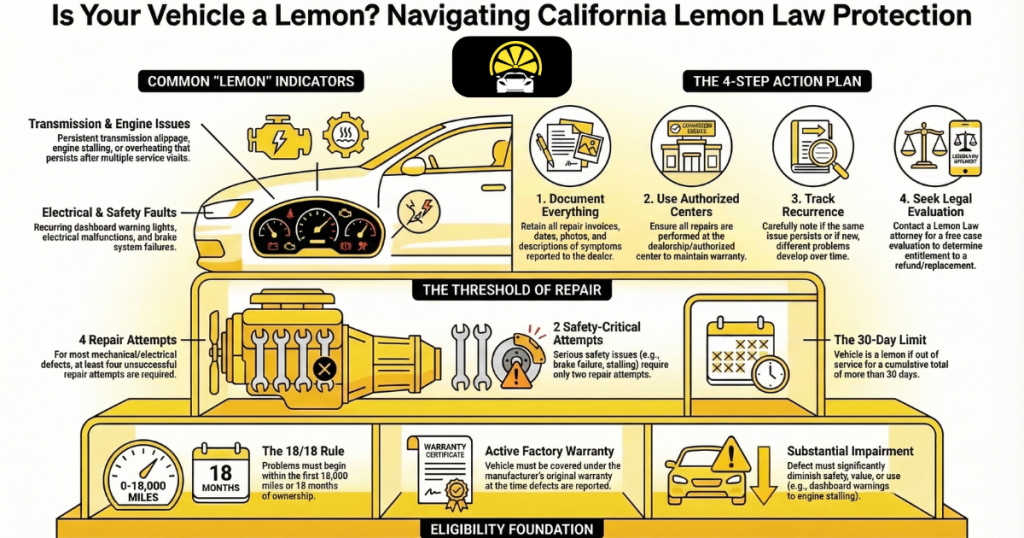
Is your car a lemon? Here’s a brief checklist to verify eligibility. The factory car warranty must be in place. Problems are eligible if they begin within the first 18,000 miles or 18 months while covered under the manufacturer’s warranty.
A car warranty lawyer can help you decipher the various types of warranties and your coverage level. Multiple repair attempts have been unsuccessful. You are required to allow a minimum of four repair attempts in most cases. However, only two are necessary if you are dealing with a serious safety issue.
The defect must substantially impair the use, value, or safety of the vehicle. Due to the vagueness of this requirement, most complaints are considered lemons. Potential issues could include a minor electrical concern or a major engine failure. The car has been in the shop for more than thirty days per complaint. The dealership cannot hold your car for more than a month for a repair.
Case Study
In a case we recently handled, one client had a 2022 sedan with repeated transmission slippage and dashboard warnings. After four failed repairs in six months, The Lemon Pros secured a full refund and coverage for towing and repair costs, showing how persistent issues can qualify for Lemon Law claims.
“Persistent car issues are not just inconvenient; they can be dangerous. Documenting every repair visit is the key to a successful Lemon Law claim,” says Michael Saeedian, founding attorney at The Lemon Pros.
When Should You Use the Lemon Law for Repeated Car Problems?
You should consider using the lemon law when your vehicle has serious defects that the manufacturer cannot fix after a reasonable number of repair attempts. A car may be considered a lemon if ongoing issues substantially affect its use, safety, or value and persist despite warranty repairs.
Repeated problems that occur on a regular basis, such as overheating, stalling, brake failures, or electrical malfunctions, can justify a claim, especially if the same issue persists after multiple service visits. A case may also qualify if the vehicle develops different problems over time that make it unreliable, unsafe, or frequently unusable.
If your car spends excessive time in the repair shop, requires repeated fixes for the same defect, or continues to experience different problems that interfere with normal driving, it is time to explore your legal options. Keeping detailed repair records and requesting a free case evaluation from a lemon law attorney can help you determine whether you qualify for a refund, replacement, or compensation.
Our 4-Step Lemon Law Approach
Protecting your rights under Florida’s lemon law starts with a clear, organized approach. Our 4-step Lemon Law process helps Orlando drivers document issues, ensure proper repairs, and evaluate their case efficiently so you can pursue a replacement vehicle, refund, or settlement with confidence.
- Document Everything: Keep repair invoices, dates, symptoms, and photos of issues.
- Authorized Repairs Only: Take the car to the dealership or authorized service centers.
- Track Recurrence: Note if issues occur on a regular basis or involve different problems.
- Free Case Evaluation: Contact a California Lemon Law attorney to review your eligibility and next steps.
Need a Lemon Law Attorney for Your Defective Vehicle?
 common car problems - The Lemon Pros" class="wp-image-32814"/>
The Lemon Pros focus exclusively on California Lemon Law claims, giving clients unmatched expertise and a proven success record. Unlike general law firms, we handle every detail so consumers can avoid stress and maximize their compensation. Whether you are dealing with repeated faulty spark plugs or a catalytic converter that continues to go bad, you may be able to get compensation.
The Lemon Pros are the team for you. As trusted California lemon law advocates based in Beverly Hills, The Lemon Pros offer 24/7 free case evaluations to help consumers understand their legal options. Reach out for your free case evaluation today.
Frequently Asked Questions
Have questions about your car problems? Here are answers to some of the most common car problems we encountered relating to lemon law.
What Are the Warning Signs of a Lemon Car?
A lemon car often shows repeated problems that affect its safety, use, or value despite multiple repairs. Common signs include persistent warning lights, engine stalling, brake failures, overheating, or electrical malfunctions that continue after service visits.
How Many Repair Attempts Qualify a Car Under Lemon Law?
Most lemon laws consider a car a lemon if the same defect has been unsuccessfully repaired three to four times, or if it has been out of service for a significant number of days within the first year or warranty period. Exact requirements vary by state, so checking local regulations is essential.
Can I Get a Refund for Recurring Car Problems?
Yes, if your vehicle qualifies as a lemon under the law, you may be entitled to a refund or replacement. The manufacturer is typically responsible for reimbursing the purchase price, minus a reasonable allowance for use.
How Does Regular Maintenance Affect My Warranty?
Following the manufacturer’s recommended maintenance schedule is crucial to keep your warranty valid. Skipping oil changes, brake inspections, or other routine services can void warranty coverage for related repairs.
What Should I Do if My Car Has Persistent Engine Problems?
Document every repair visit, including dates, invoices, and the issues reported, to build a record of recurring problems. Consult a lemon law attorney or your manufacturer’s warranty service to explore your options for repair, replacement, or compensation.